Safe for kids. Safe for pets. Safe for your yard.
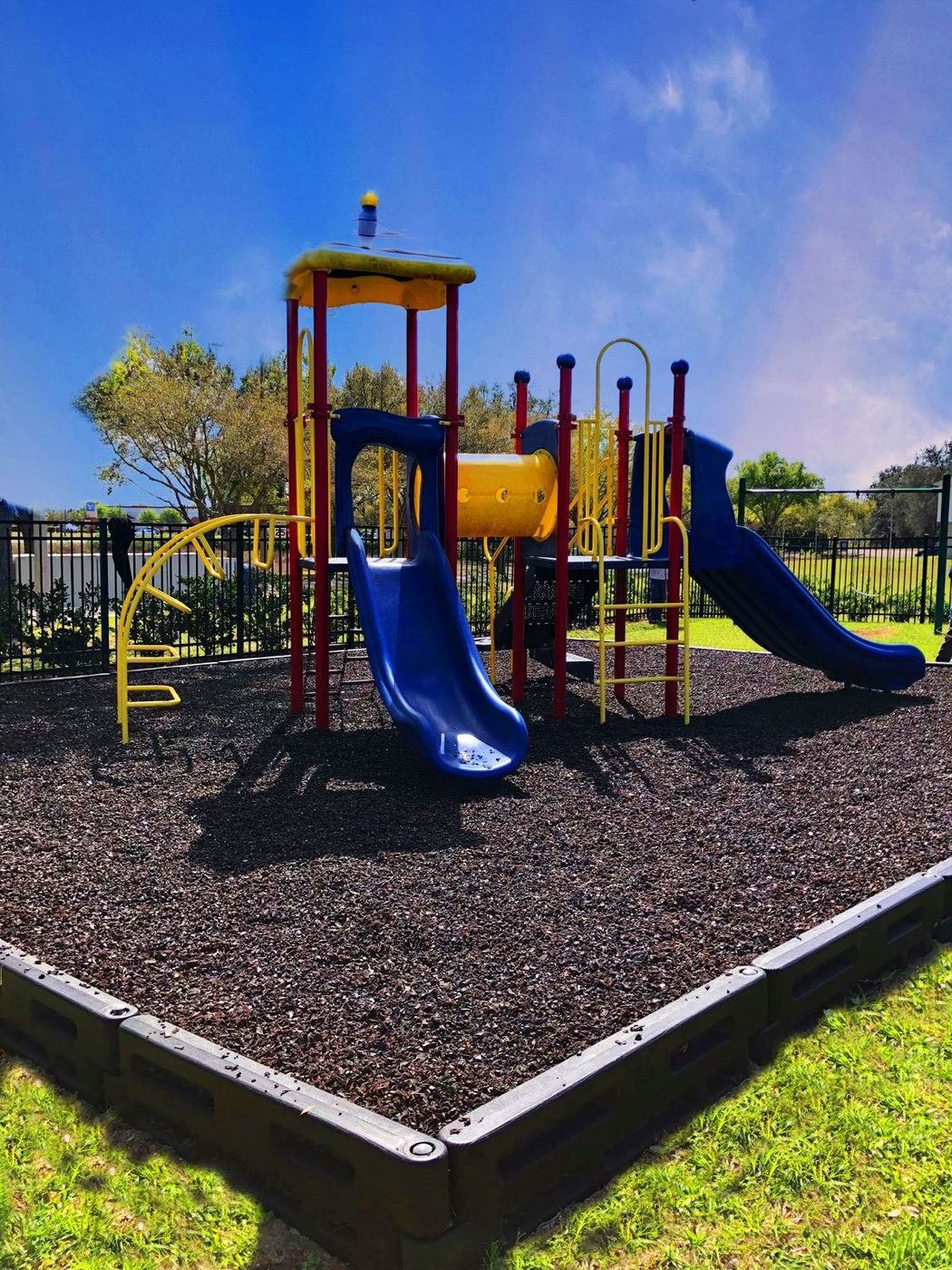
Yes. Schools, parks, and families have put certified rubber mulch under playgrounds and around gardens since 2004. It's IPEMA-certified and fall-height tested to ASTM F1292-22, and two decades of EPA, European Chemicals Agency, and California OEHHA research point the same way.
The short version
If you only read one thing, read this.
Built for the people, pets, and plants you care about.
Safe for kids
IPEMA-certified and ASTM F1292-22 fall-height tested for playground safety — which is exactly why schools, parks, and daycares use it. It cushions falls and keeps cushioning them year after year.
It stays splinter-free, hides no insects, and never packs down into a hard surface the way wood mulch does.
Safe for pets
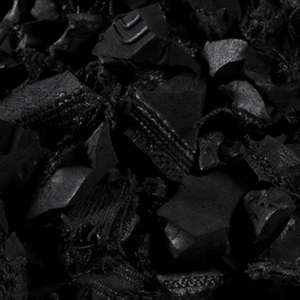
Inert and splinter-free, which is why so many dog runs and kennels use it. It won't grow mold or stay damp the way bark mulch can.
As with any ground cover, just don't let a puppy make a habit of chewing chunks.
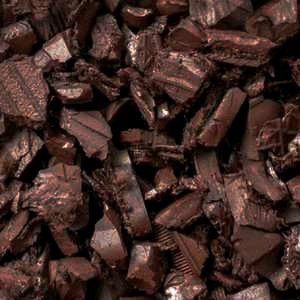
Good for your garden
More than a look — it protects the bed. It keeps weeds down, holds soil moisture, and won't rot or draw bugs the way wood does. It holds its color for years, with no annual re-mulching.
For edible or especially sensitive beds, a simple barrier laid underneath handles it — just ask and we'll walk you through it.
Verified by the people whose job it is to check.
The agencies and researchers responsible for public safety have studied recycled rubber for years, and every card below links to the original report. Most of that research covers the fine tire crumb used in sports turf, the most heavily scrutinized form. Rubber mulch is coarser, with far less surface area — so there is even less to release.
Independently IPEMA-certified to ASTM F1292-22, the playground fall-surface standard — and listed in IPEMA's public certified-products directory at ipema.org. What this means →A full EU evidence review found the chemicals in recycled rubber granules below the safety limits — PAHs under REACH limits, metals under toy-safety limits.
Read at echa.europa.euA multi-year California study of 35 turf fields found no significant health risk for players, referees, or spectators.
Read at oehha.ca.govInvestigated the soccer-coach list that started the cancer worry — and found the number of cancers was lower than expected for the population.
Read at doh.wa.govFederal research measured the chemicals in recycled-rubber surfaces and found only limited human exposure during play.
Read at epa.govA peer-reviewed oncology review (Bleyer, 2017) concluded the science does not support a cancer link to synthetic turf.
Read the paperThe federal product-safety commission runs a neutral information hub on recycled-rubber surfacing.
Read at cpsc.govWhy loose rubber mulch holds up.
Loose rubber mulch and poured-in-place (PIP) rubber are both recycled-rubber playground surfaces. The difference is how they hold up over the years — and it's a big reason loose fill is such a common choice for families and parks.
It keeps its cushioning
A poured-in-place surface gets its fall protection from a bound "wear cap" on top. Sun and daily use wear that binder away. A specialist then has to recap or reseal PIP every year or two to keep it protecting.
Loose rubber mulch has no adhesive layer to break down. You restore full protection by raking it level and topping up the depth. The U.S. Consumer Product Safety Commission notes that sun, use, and drainage make unitary surfaces like PIP "degrade and need replacement over time."
Water drains straight through
Loose rubber mulch is completely permeable — rain runs right through it to the ground below, so the play surface isn't left holding standing water. A sealed poured surface depends on proper slope and drainage to shed water, and drainage problems are one of the factors the CPSC lists that can shorten a unitary surface's life.
No binder poured onto your play area
A polyurethane binder, mixed and cured on site, holds poured-in-place together, and it needs a fresh coat as the old one wears. Loose rubber mulch adds no glue, binder, or topcoat to your play area — it's simply the coated rubber, loose on the ground.
Simple to maintain, and less to spend
The CPSC states plainly that unitary surfaces like poured-in-place cost "significantly higher" than loose-fill. And where a cracked or worn PIP surface needs a specialist with the right binder and topcoat, a loose surface is topped up by the same crew — or family — that already cares for the yard.
Source: U.S. Consumer Product Safety Commission, Public Playground Safety Handbook (Publication 325) — on playground surfacing cost, maintenance, and degradation over time.
Sunny play area? Let's set it up right.
Like any surface in full sun — sand, asphalt, even bare soil — rubber mulch warms up. In a sunny play area, a few simple choices keep it comfortable: shade, lighter colors, and the right depth. In the years since 2004 (including scorching Arizona summers), we know exactly how to help — just ask, and we'll point you the right way before you order.
Ran across something and want a straight answer?
The questions people ask most, each answered with the research behind it.
Does rubber mulch cause cancer?
No — the agency that investigated the scare found the opposite. It began with a soccer coach's list of players who'd had cancer. The Washington State Department of Health investigated that exact list.
It counted fewer cancers than expected for the population, and it told everyone to keep playing, whatever the surface. A peer-reviewed Sports Medicine review (Bleyer, 2017) and California's OEHHA reached the same conclusion.
What about chemicals?
Rubber contains trace compounds — and so does the natural soil in your yard. The European Chemicals Agency found them below the EU's safety limits, and in testing of rubber mulch essentially only zinc — a nutrient your body needs — showed up in any meaningful amount.
Does it have a smell?
A faint new-rubber smell can be noticeable up close at first, and it fades outdoors. Air-monitoring studies — including the EPA's — found only small amounts of compounds released into the air, within the range of normal outdoor air.
Does anything reach the soil or water?
Independent testing of rubber-mulch leachate comes in well below regulatory limits — essentially only zinc shows up in any meaningful amount, and the European Chemicals Agency found the chemicals below the EU's safety limits. Zinc is a nutrient, not a danger to people; the only catch is that in high amounts it can affect sensitive plants, which is why a simple barrier under edible beds is a smart step.
Want the facts to share?
Every certification and study above links straight to the original agency or journal — the proof is ready to share with a school board, a parent, or a skeptical neighbor. Want it all in one document, with the standards, the 10-year cost math, and a buyer's toolkit?
The safe, certified choice — delivered free.
Pick a color and size your order, or call us — we've done this since 2004.